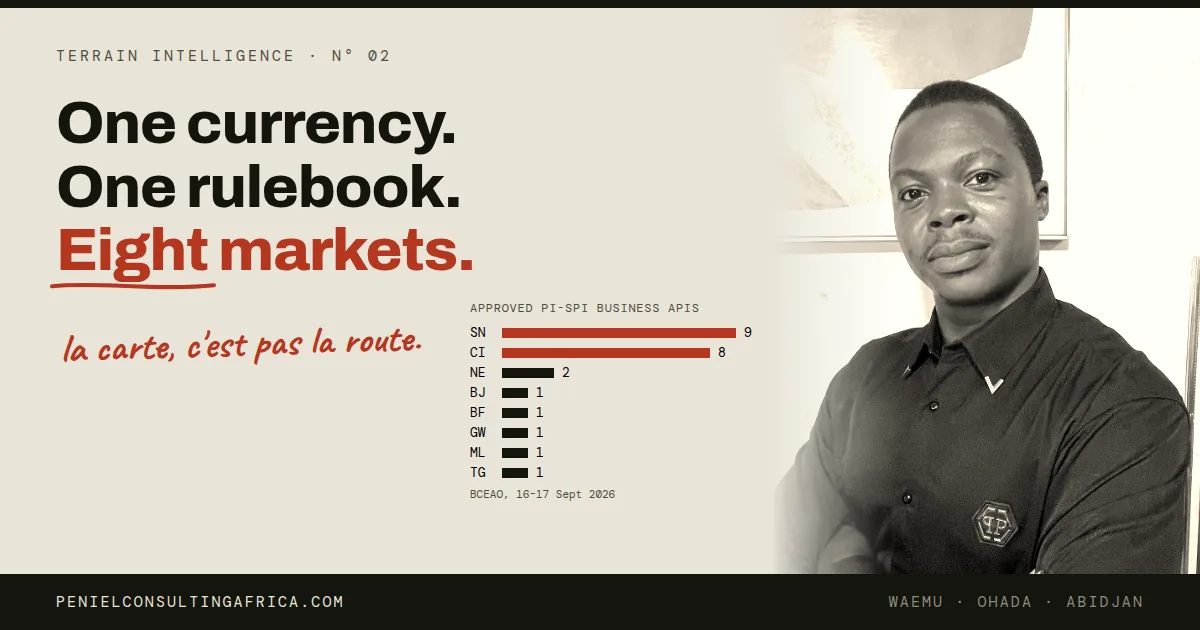
One Currency. Eight Markets.
The WAEMU zone shares one currency, one central bank and one business law. If common rules made a single market, this would be it. Four readings show otherwise: one rulebook, eight different grounds.
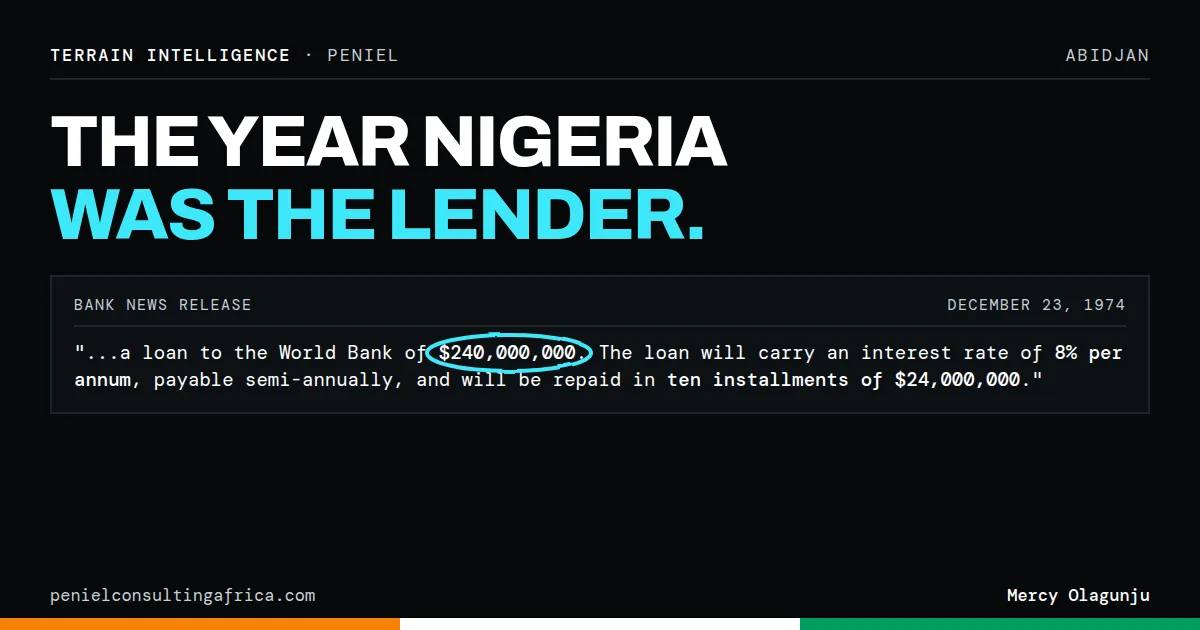
The Year Nigeria Was the Lender
In December 1974 the World Bank borrowed $240 million from Nigeria, at 8%. Fifty-two years on, Nigeria owes that same Bank $19.1 billion, and one private refinery is worth two-fifths of its stock market. Both ends of the ledger, with nothing airbrushed.
Yes, You Can Take Your Money Out. That Is Not the Question.
The regulation many still quote on repatriating capital from the WAEMU zone was repealed in December 2024. Here is the one that applies, what it actually permits, what it forbids your intra-group structures, and why your bank will still ask for a file.
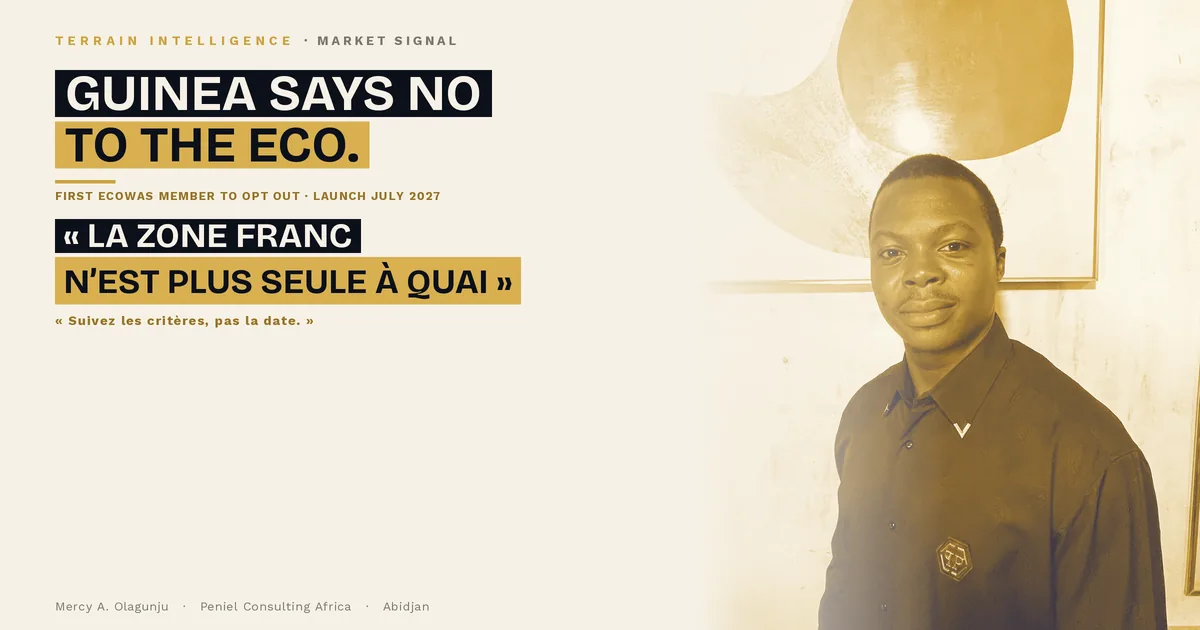
The First Country to Say No to the Eco Wasn't in the Franc Zone
Guinea has become the first ECOWAS member to formally opt out of the Eco, weeks after the bloc reaffirmed a July 2027 launch. What the first defection tells you about a currency union that starts with whoever is ready.
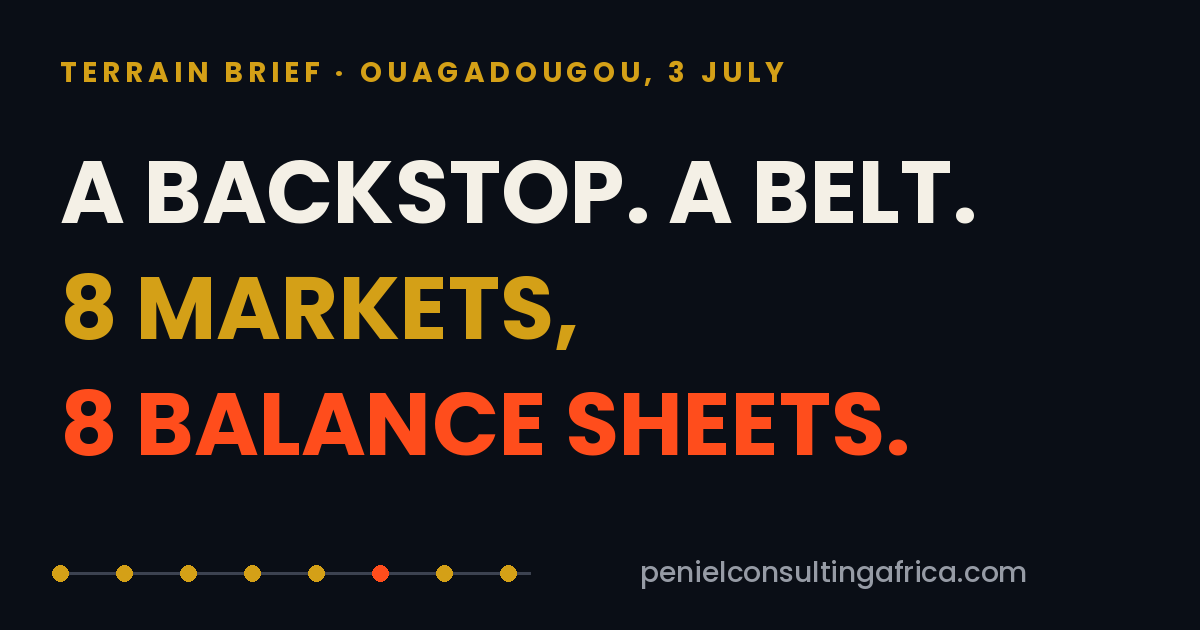
WAEMU Just Built a Backstop and Set a Belt-Tightening Path. Read What That Tells You About Who Pays for Growth.
On 3 July 2026 WAEMU finance ministers operationalized the Union's Financial Stability Fund and set a fiscal-consolidation path — deficit down to 2.9% of GDP by 2027. A bloc building a safety net while tightening the public purse is telling you who is expected to pay for growth. What it means for a firm entering.
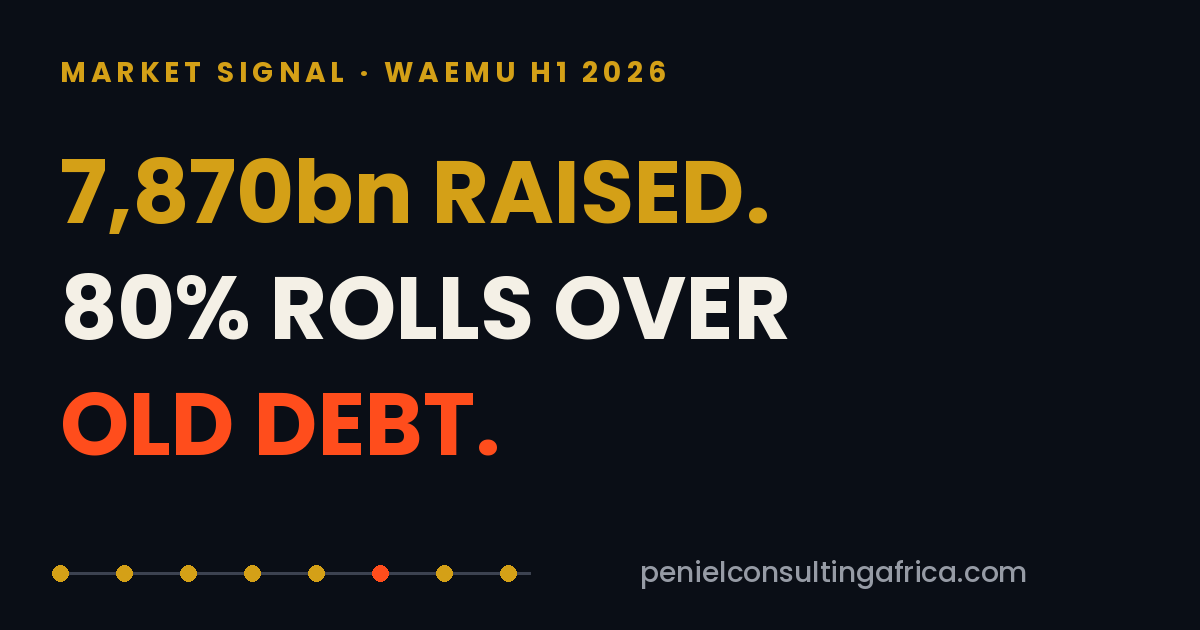
WAEMU Just Raised a Record 7,870bn FCFA — and 80% of It Only Rolls Over Old Debt
WAEMU states raised a record 7,870 billion FCFA on the regional securities market in H1 2026 — but redemptions of 6,245 billion mean net new money was barely 1,625 billion. What a refinancing-driven record actually means for a firm counting on local capital to enter Francophone Africa.
Who Really Makes Money in Francophone Africa Now?
In 2017 the answer was France — via currency, troops, political ties and language. By 2026 three of those four levers have materially eroded: the bases are gone, China took the trade crown, the CFA grip loosened, and Africans are redrawing the map. A terrain read for anyone entering.
The Frontier Everyone Can See and No One Can Measure
WAEMU's informal economy runs to ~92% of employment — bigger than Nigeria's and less measured. Why the market you can't count is the one that decides, and what it means for deploying capital in Francophone Africa.

Côte d’Ivoire’s PND 2026–2030: What a 70%-Private Development Plan Actually Means for Your Entry
Côte d'Ivoire's PND 2026–2030 stakes 70.2% of a 114,838.5 billion FCFA plan on private capital. What a private-financed national plan actually means for a firm deciding whether to enter — the tailwind, the timing, and the gap between ambition and ground.
Dangote ne signe pas des contrats. Il devient l’infrastructure.
~46 milliards de dollars d'investissements 2026–2028 : raffinerie kényane, engrais éthiopiens, potasse en RDC, cuivre en Zambie, IPO panafricaine. Ce n'est pas une frénésie de contrats — c'est une stratégie d'import-substitution à l'échelle du continent. Ce que cela signifie pour votre marché. Lecture terrain, depuis Abidjan.
2027 : l’Eco part avec les anglophones. La zone CFA reste à quai.
La CEDEAO a réaffirmé le lancement de la monnaie unique, l'Eco, pour 2027 — à plusieurs vitesses, « avec ceux qui sont prêts ». La première vague pressentie est à dominante anglophone. Ce que cela signifie pour une entreprise qui opère en zone franc. Lecture terrain, depuis Abidjan.
Working in capital, currency & macro in Francophone Africa?
Bring one specific question. A 20-minute Terrain Briefing tells you what it costs to get it right versus wrong, before you commit capital.
Book a Terrain Briefing