
PI-SPI, One Year On: 175 Doors, and a Ceiling at 8,000 Francs
The 30 September deadline for banks, e-money issuers and payment institutions passed without another extension. The BCEAO published 175 participants authorised to open PI-SPI to the public, made the platform mandatory for interoperable e-money from 2 November, and turned 2025's "free" into a ceiling. What it published, what it still does not, and where I was wrong.
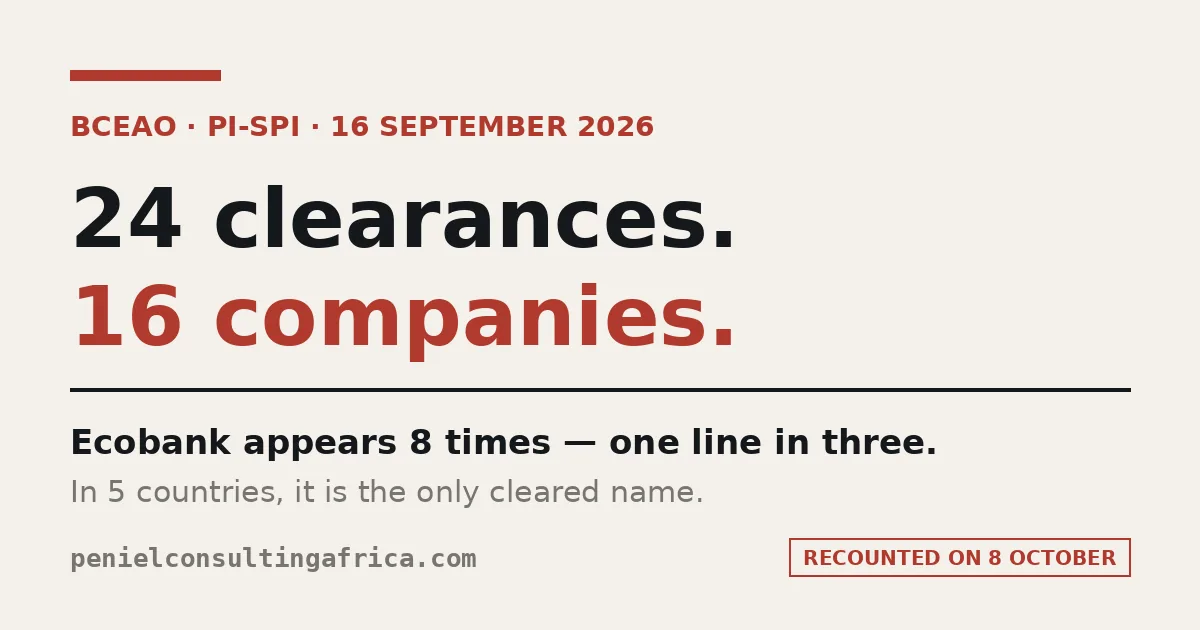
Twenty-Four Names. Sixteen Companies.
The BCEAO published the list of Business APIs cleared for its instant payment rail. Twenty-four lines, eight countries. Count companies instead of lines and sixteen remain — with one name holding a third of them. The deadline falls in ten days.
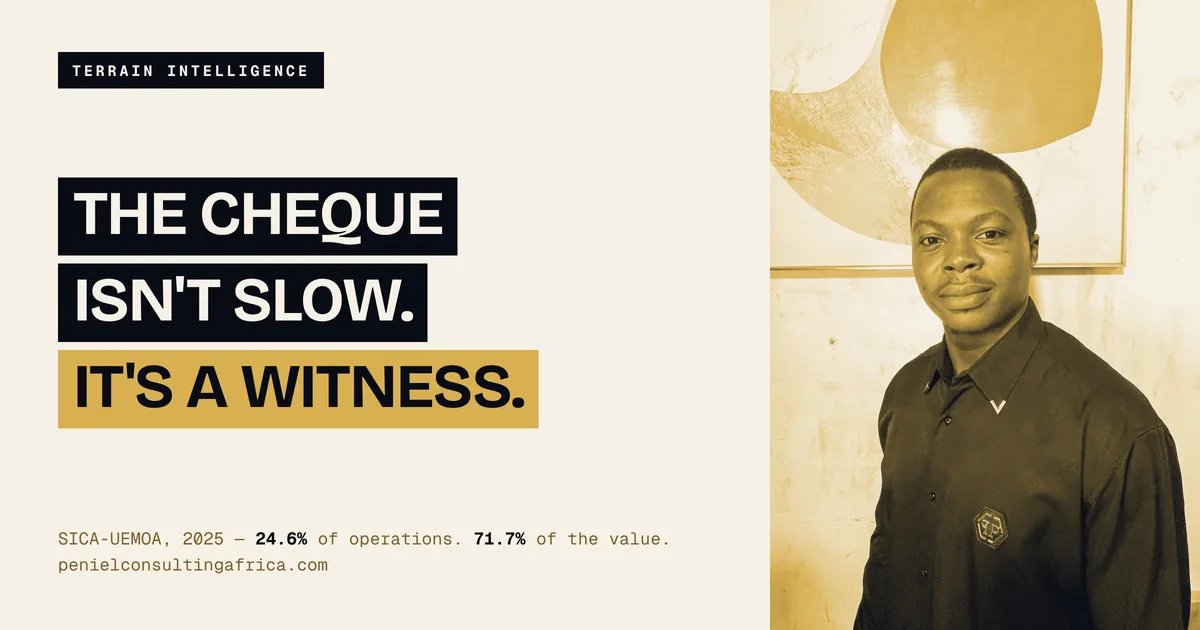
The Cheque Isn't Slow. It's a Witness.
The BCEAO built an instant payment rail that moves money in seconds across eight countries. In the same year, cheques carried 71.7% of the value in the region's retail clearing system — on 24.6% of the transactions. That gap isn't a technology problem.
Interoperability: Friction or Fiction?
The BCEAO says WAEMU has one interoperable instant-payment rail. Five days before it became mandatory, the deadline slipped to September — while users still can't pay. A terrain read on the gap between the announcement and the ground.
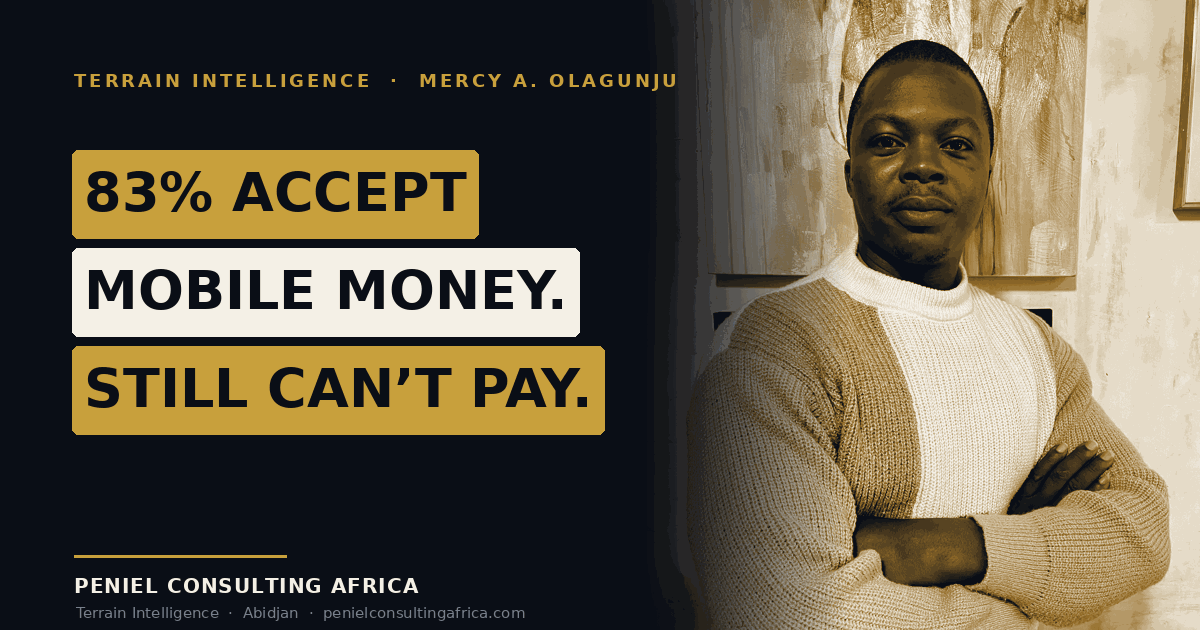
83% Accept Mobile Money. So Why Can’t My Users Pay?
The ITC's 2025 report says 83% of online sellers in Francophone Africa accept mobile money. From the ground, users still type 'ça ne marche pas'. A terrain read of the numbers — and the interoperability line the headline buries.
Working in fintech & payments in Francophone Africa?
Bring one specific question. A 20-minute Terrain Briefing tells you what it costs to get it right versus wrong, before you commit capital.
Book a Terrain Briefing